
FINAL FANTASY RESONANCE Timeline and stagger
No ATB. Hit weaknesses, break the gauge, and spend Extra Phase on Vision Resonance.
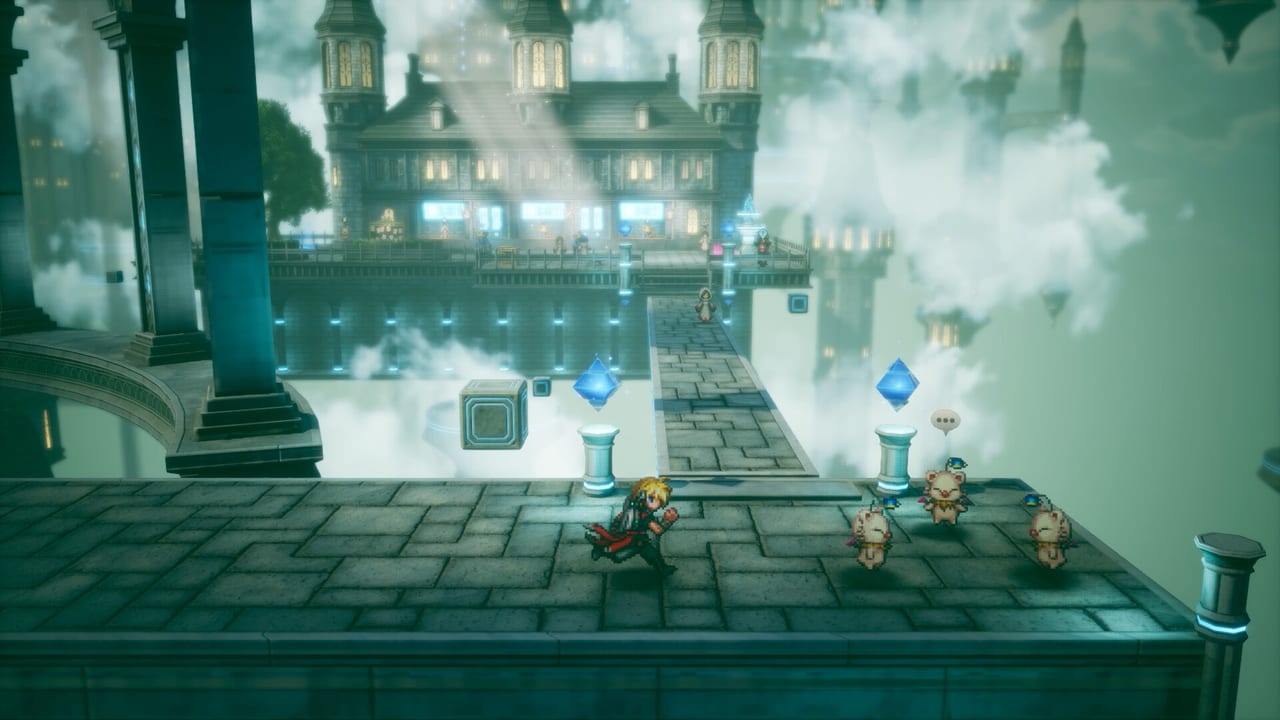
FINAL FANTASY RESONANCE uses traditional turn-based combat. There is no ATB bar, no waiting on a fill meter to steal a slot, and no requirement to time a face button for a hit. A timeline at the top of the screen runs left to right and shows the order of upcoming turns. Under each enemy’s HP sits a stagger gauge. Weaknesses fill that gauge faster. A stagger stops the enemy’s turn and lowers defense. Stagger every foe in one turn — Sweeping Stagger — and Extra Phase opens for Vision Resonance.
This page is the systems briefing. Practice it in the Chapter 1 demo, which is playable today; the retail campaign launches October 22, 2026. Pair it with Getting Started if you still need party context, and with the Demo Guide if you are inside the opening chapter. Return to the Guides Hub when you need a different topic.
Read the timeline first
Before you pick an ability, look at the timeline. Left is now; right is later. Your party and the enemy share that line. When a portrait or icon reaches the action point, that unit takes a turn. On your turn you choose a conceptual action: a basic attack, a Vision ability, an item, a defensive wait, or — when the fight has earned it — an esper burst or a Resonance finisher. Exact menu labels live in the game. We do not invent unpublished button maps; see Controls for device support, Steam Input, and the keyboard-only option.
Because there is no ATB, you cannot twitch your way past a bad order. You can delay a slow attack so a healer acts first, or spend a fast hit to finish a stagger bar before an enemy’s portrait arrives. That is the whole skill: sequence, not reflex. Difficulty is adjustable if the order still feels loud. Random encounters on the HD-2D field use the same rules as story fights; they are not a separate card mode and they are not skippable lore.
Stagger is the real HP bar
Each enemy has HP and a stagger gauge beneath it. Normal hits chip both. Hits that match a weakness — fire into ice, lightning into a metal frame, a physical break into a flinching knight — fill stagger faster. When the gauge breaks, two things happen: the enemy loses the turn it was about to take, and its defense drops so the rest of your party can dump damage.
Do not treat stagger as a bonus crit sticker. Treat it as the off-switch. A boss that is about to act is a boss you should be staggering, not a boss you should be chipping with an unmatched element. Tronn, the black mage Vision, is called out in previews as a stagger specialist; Leah covers white magic so someone else can keep the timeline healthy. Those kits live on How to Get Visions and the Vision roster. Mixing them inside the cost cap is Jobs and Abilities.
Sweeping Stagger and Extra Phase
If you stagger every enemy currently on the field in a single turn, you trigger Sweeping Stagger. That is the gate for Vision Resonance at Extra Phase: a cinematic finisher that uses the crystals you have equipped, one Vision per character. Extra Phase is not a second ATB and it is not a Limit Break you can mash from the first menu. You earn it by clearing the board’s gauges together.
Plan trash packs for practice. A three-enemy fight is a better classroom than a solo dummy, because Sweeping Stagger needs every bar broken in the same turn window. Bank a turn of setup, then spend the next turn on matching weaknesses. When Extra Phase opens, fire Resonance instead of another basic attack. That loop is the combat identity Square Enix is selling: turn-based, readable, and spectacular only after the gauges agree.
Elements, Visions, and the party you actually have
You control Rain, Lasswell, and Fina in the Grandshelt opening, with Jake and Lid joining as the story opens. Each character equips one Vision. Cloud is physical plus lightning. Charlotte is an ice and water knight. Leah is white magic. Tronn leans black magic into stagger. Aileen brings weaponsmith tools and Pilebunker. Warrior of Light, Terra, Clive, Tidus, Zidane, Noctis, Squall, Y’shtola, and Shantotto are among the other confirmed crystals. Square Enix’s total is 26. Early rankings belong on the Vision tier list; party roles belong on the party page and the party tier list.
Build for the next stagger, not for a screenshot. A lightning physical on Cloud is wasted if the pack is waiting on ice. Swap the equipped Vision between fights when the cost cap allows, and park learned abilities on the crystal that actually acts next. The Characters hub is the roster home.
Espers: three turns, then the named finish
Espers are not Visions. When you call Ifrit, Shiva, Titan, Siren, or Ramuh, you play a short burst: three turns of the esper’s presence, then a finishing move with a classic name. Ifrit uses Hellfire. Shiva uses Diamond Dust. Titan uses Gaia’s Wrath. Siren leans wind and water. Ramuh uses Judgment Bolt. Spend those three turns setting stagger or covering a weakness the party cannot reach, then let the finish land while defense is already broken.
Do not blow an esper on the first random encounter of a dungeon. Hold it for a pack you cannot Sweeping-Stagger with Visions alone, or for a named fight the story puts in your path. Side trials and later hunts are previewed on Side Content; they are not Chapter 1 homework.
Practice order for Chapter 1
In the demo, win a fight the slow way. Watch the timeline. Match one weakness. Break one gauge. Then try to break every gauge in the same turn. Only after that loop feels boring should you care about Deluxe extras such as the Archwitch’s Grimoire and Fel Meteor — those are edition bonuses, listed on the Pre-order Guide, not combat unlocks you missed in a menu.
Footage of the pixel battles sits with trailers. Dates sit on the release date page. Official listings are on Links. PC players can confirm Windows 11, DirectX 12, and Steam Deck Verified status on system requirements.
The best combat practice is a single random fight where you never press Attack twice in a row without checking the stagger bar. If you can call why a Sweeping Stagger happened, you are ready for Resonance. If you cannot, fight the next trash pack slower. Speed comes after the gauge makes sense.
Frequently Asked Questions
Quick answers drawn from Square Enix briefings and the Chapter 1 demo.
Does FINAL FANTASY RESONANCE use ATB?
No. Combat is traditional turn-based. A timeline at the top of the screen runs left to right. There is no ATB fill and no timed input requirement. Device notes are on Controls.
What does stagger do?
The gauge under HP fills faster when you hit weaknesses. A stagger skips that enemy's turn and lowers defense. Breaking every enemy in one turn is Sweeping Stagger, which unlocks Vision Resonance at Extra Phase.
How do espers work?
Call Ifrit, Shiva, Titan, Siren, or Ramuh for a three-turn burst, then a named finishing move such as Hellfire or Judgment Bolt. They are separate from Visions. Preview hunts sit on Side Content.
Can I practice this before October 22?
Yes. The Chapter 1 demo is playable today and uses the same timeline rules. Follow the Demo Guide so you spend those hours on stagger instead of uncapped grinding.
How do Visions change a turn?
Each character equips one Vision. Learned abilities can be mixed within a cost cap. Sweeping Stagger spends Extra Phase on Vision Resonance. Start with How to Get Visions and Jobs and Abilities.